10. Iron-On Interfaced Structured Liner
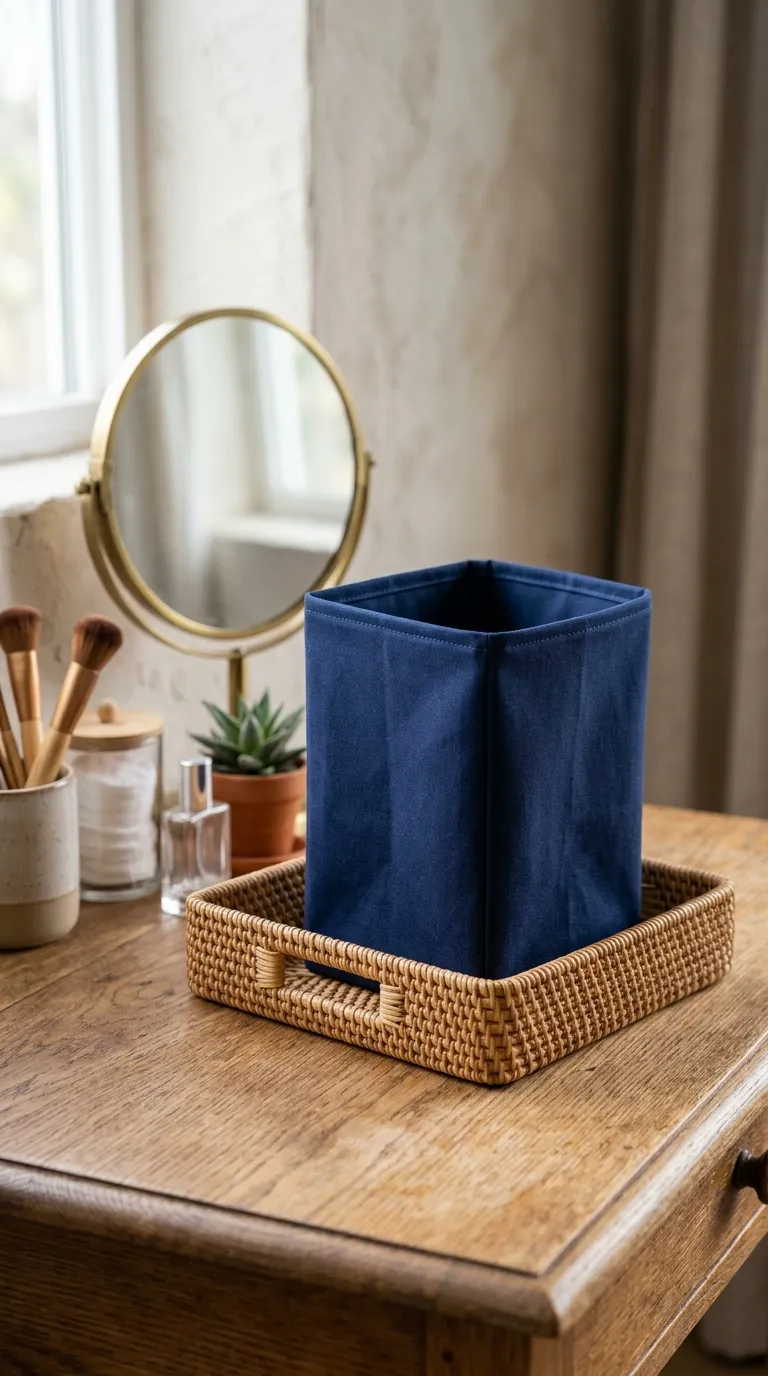
If you want a liner that stands up on its own and holds its shape inside a basket, iron-on interfacing is the secret ingredient. By fusing a stiff interfacing to the back of your fabric, you create a structured liner that looks almost like a custom-fitted box.
Choose a medium to heavyweight fusible interfacing. Cut it slightly smaller than your fabric piece on all sides. Place the interfacing on the wrong side of the fabric, following the manufacturer’s instructions for heat and steam, and press until it adheres. Once the fabric is stiffened, cut it to size, finish the edges, and drop it into the basket.
Structured liners are wonderful for shallow baskets used as trays, for vanity organizers, and for any space where you want the liner to feel like part of the basket rather than a soft pouch inside it. Pair the structured liner with a fabric that has a tighter weave, like a cotton twill, for the most polished result.
💡 Pro Tip: If you only need a stiffer liner for certain sections, like just the bottom of a basket, you can fuse a smaller piece of interfacing to that area only. It gives you the structure you need without changing the way the rest of the fabric drapes.
What is the cheapest way to make a fabric basket liner?
The cheapest option is a no-sew drop-in liner made from a single piece of fabric, hemmed with fabric glue or simply pressed into the basket with extra length to fold over the rim. A fat quarter from a local quilt shop, a discount remnant, or even a thrifted sheet can become a full set of liners for just a few dollars.
Do fabric basket liners need to be washable?
Most cotton and linen fabrics are washable, and it’s a good idea to choose washable options for liners in bathrooms, kitchens, nurseries, or anywhere that might see spills. Pre-wash your fabric before cutting to prevent shrinking later, and finish the edges with a hem or fray-check so the liner holds up to laundering.
Can I make fabric liners without a sewing machine?
Absolutely. No-sew versions use fabric glue, iron-on hem tape, or simply a folded edge. Drop-in liners and frayed edge styles are particularly friendly to hand-free construction, and the results look just as lovely as their sewn counterparts when you choose the right fabric.
What fabric works best for basket liners?
Medium-weight quilting cotton is the most versatile choice because it comes in countless prints, holds a fold or pleat, and is easy to work with. Linen and cotton-linen blends offer a more relaxed, natural look. Canvas is great for structured projects, while burlap and loosely woven fabrics suit rustic styles.
How do I measure fabric for a basket liner?
Measure the inside width, length, and depth of the basket. For drop-in liners, add about one to two inches to each measurement so the fabric folds over the rim. For fitted liners, add seam allowances and corner pleats. Always measure the actual basket, not the label, since sizes can vary.
Are fabric basket liners safe for kids’ rooms?
Yes, as long as you secure any drawstrings, ties, or loose cords so they can’t pose a hazard. For very small children, skip the drawstring style and choose a fitted, hemmed, or drop-in liner instead. Cotton is breathable, washable, and free of most concerns associated with synthetic storage materials.
How do I keep fabric liners from slipping around inside the basket?
There are a few tricks. You can add a small piece of non-slip shelf liner or grippy dots to the bottom of the fabric before installing it. Hemming the bottom edges to add a little weight also helps. For wire or smooth-sided baskets, a few dabs of museum putty between the liner and the basket will keep everything in place without damaging either surface.
Fabric basket liners are one of those small projects that quietly transform a room. They don’t require a lot of time, a lot of money, or a lot of skill, but they make every storage bin feel considered, coordinated, and a little more like you. Pick the idea that speaks to you, grab a piece of fabric you love, and give one basket a brand new look this weekend.
Once you start, it’s hard to stop. There’s something deeply satisfying about lining basket after basket, watching a shelf go from cluttered to curated with just a few pieces of fabric and a little folding. Mix patterns, match solids, swap liners with the seasons, or commit to a single fabric for a calm, cohesive look. Whatever you choose, your storage will never look quite the same.