10. Living Willow Trellis Fence
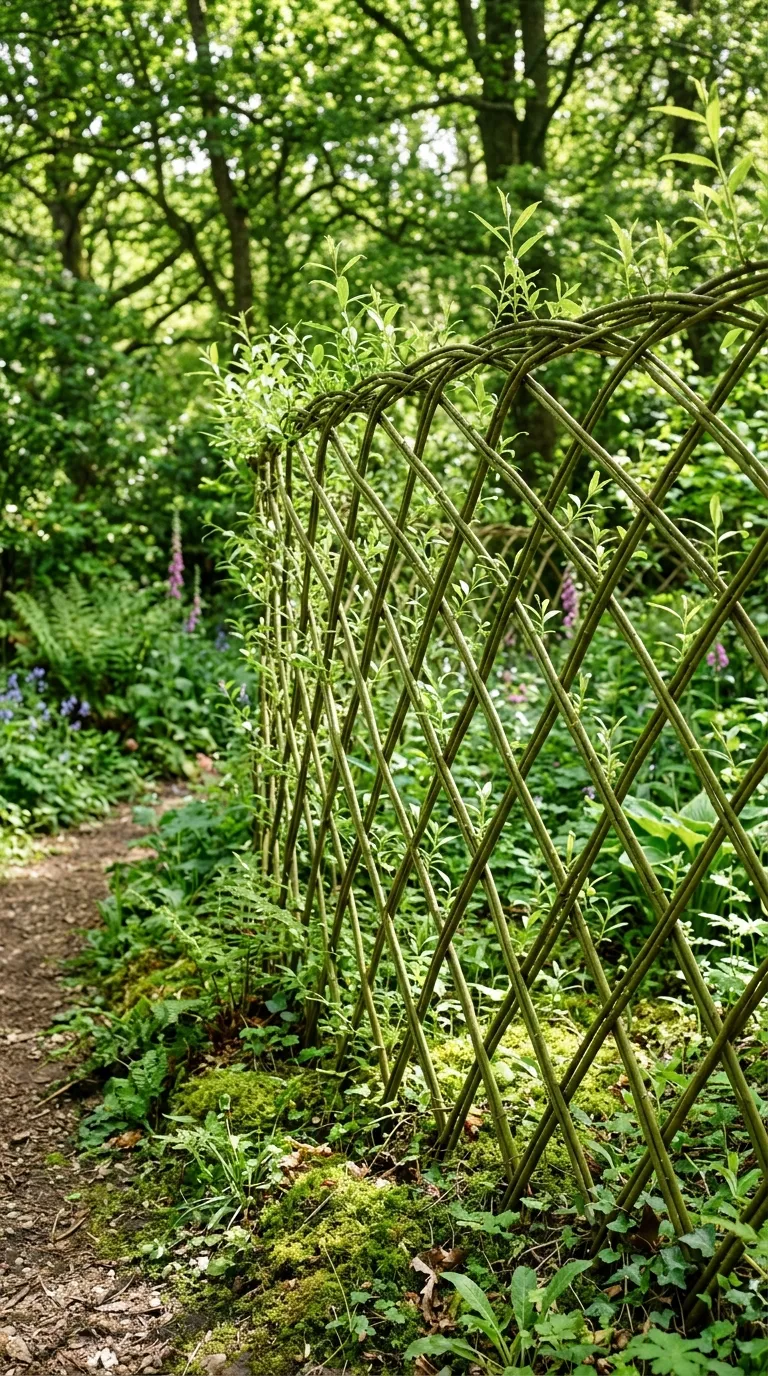
For the most ambitious project on this list, a living willow trellis is a true showpiece. Willow branches are flexible enough to weave into intricate patterns, and if you plant them, they actually root and grow into a living fence. This is the trellis that gets more beautiful every year, not less.
Materials: Long, straight willow whips (6 to 8 feet is ideal), a spade or auger, garden twine, and a source of water nearby since willow loves moist soil.
Time: A long day to build, then ongoing maintenance as it grows.
Difficulty: Intermediate to advanced. The weaving is simple, but planning the layout takes some thought.
Soak your willow whips in water for 24 hours before planting to keep them flexible. Then, push the thick ends into the soil about 8 to 10 inches deep, angling them slightly. Weave the willow whips in and out of each other to create a diamond or lattice pattern, tying the joints with twine to hold everything in place while the roots establish.
Once the willow takes root, it will leaf out in spring and add new growth each year. You can train it thicker, prune it into a neat shape, or let it grow wild for a romantic, whimsical look. In just a couple of years, you’ll have a privacy screen that’s literally alive.
What is the cheapest material for a DIY garden trellis?
Pallets and bamboo poles are usually the most affordable options. Both can often be found for free or very low cost, and they work well for most climbing plants.
How tall should a privacy trellis fence be?
For comfortable backyard privacy, aim for at least 6 feet. Anything shorter tends to leave gaps when sitting or standing, while taller structures can feel imposing and may require permits depending on your area.
What plants grow best on a trellis fence?
Climbing roses, clematis, honeysuckle, wisteria, and jasmine are perennial favorites. For quicker coverage, try annual climbers like morning glories, sweet peas, or scarlet runner beans.
Do I need to treat the wood on my trellis?
If you’re using cedar, treatment is optional since the wood is naturally rot-resistant. For pine or other softwoods, applying an exterior stain or sealant will significantly extend the life of your trellis.
How long does a DIY trellis fence last?
With proper materials and a good stain or sealant, a wooden trellis can last 10 to 15 years. Metal and copper versions can last even longer, while bamboo and willow trellises may need replacing or refreshing every 5 to 7 years.
Can I attach a trellis to an existing fence?
Yes. Many gardeners mount trellis panels directly to chain-link or wooden fences to add height and create more privacy. Just make sure the existing fence is sturdy enough to support the added weight, especially once plants grow in.
How do I keep my trellis from blowing over in strong wind?
Set your posts at least 18 to 24 inches deep, use quick-setting concrete around the base, and consider adding diagonal braces for taller trellises. Choosing plants with lighter foliage also reduces wind resistance.
There’s no single right way to add privacy to a garden, and that’s the beauty of doing it yourself. Whether you’re drawn to the rustic warmth of a pallet trellis, the clean lines of a horizontal slat design, or the living magic of woven willow, each of these projects invites you to slow down, get your hands a little dirty, and create something that grows along with you. Pick the one that makes your heart skip a little, gather your materials, and enjoy the process. Your garden is about to become your favorite place to be.