6. Natural Stone Slab Walkway
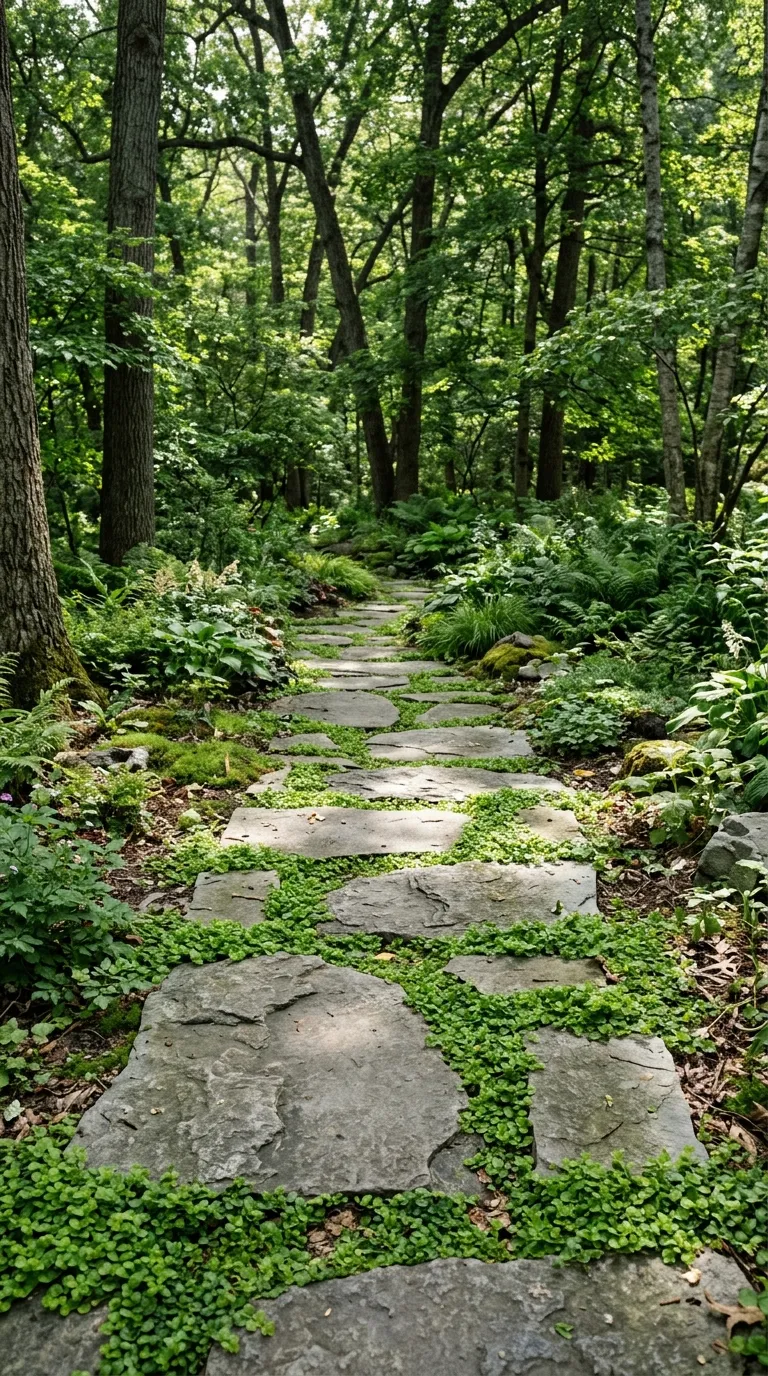
Large, irregular stone slabs create a path that feels both primitive and refined, the kind of walkway you might find at an old Japanese garden or a centuries-old European estate. The look depends on choosing the right stone, so take your time sourcing pieces that have natural variation in color, texture, and shape.
You can use bluestone, sandstone, limestone, or fieldstone for this project. Local stone yards will have the best selection, and many will deliver. You’ll need enough slabs to cover about 60 to 70 percent of the path area, with the remaining space filled by ground cover or smaller stones.
Excavate the path about 4 inches deep, add a base of compacted crushed stone, then a 1-inch layer of sand for fine-tuning. Set each slab in place, wiggling it gently until it sits firmly. Check that adjacent slabs are roughly level with each other, although some variation actually adds to the natural look.
For the gaps, you have several options. Lawn grass is the most traditional choice, but it requires regular edging to keep it looking tidy. Creeping Jenny, mazus, or low-growing sedums create a softer, lower-maintenance alternative. For a more architectural feel, fill the gaps with dark gravel or river rock.
Budget around $5 to $15 per square foot for natural stone, depending on the type and source. The installation is straightforward but physically demanding because of the weight of the slabs. Get a friend to help lift the larger pieces, and don’t skip the level checks. A slab that’s even slightly wobbly becomes a tripping hazard after a few seasons.
💡 Pro Tip: When sourcing stone, ask the supplier for “seconds” or “B-grade” pieces. These have natural flaws, chips, or color variations that actually make the path look more authentic, and they cost significantly less than premium pieces.