2. Flagstone Walkway with Creeping Thyme
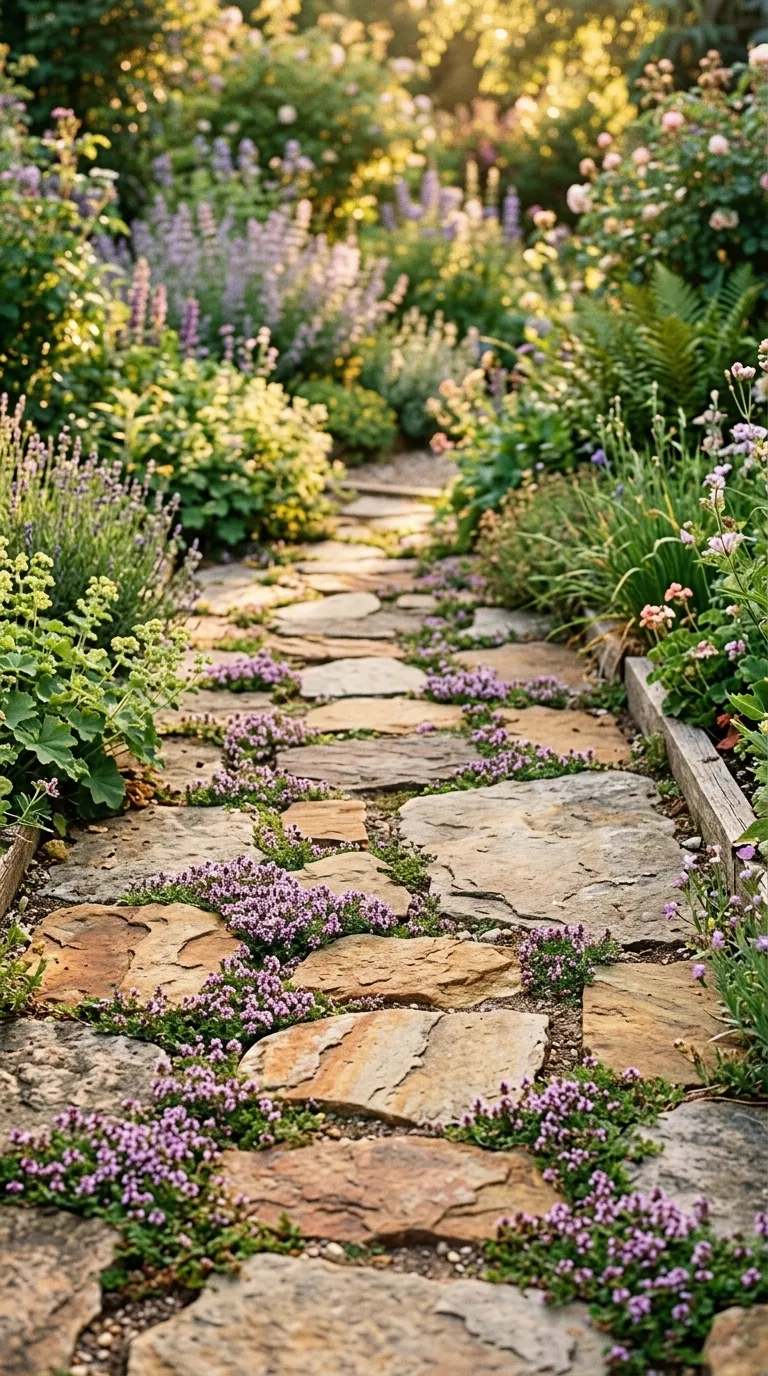
If you want a path that looks like it’s been there for generations, irregular flagstone is the way to go. Real flagstone has a natural, layered texture with earthy tones of tan, gray, rust, and blue-gray. No two pieces are exactly alike, which gives the path an organic, time-worn feel that concrete pavers can’t quite match.
You’ll need enough flagstone pieces to cover your desired path, plus a base of decomposed granite or crusher run for stability. A rubber mallet, level, and a hand tamper are essential. Most home improvement stores sell flagstone by the pallet, and you can also check local stone yards for better prices and a wider color selection.
Lay out your flagstone pieces on the ground first to plan the arrangement, leaving 2 to 4 inch gaps between them. Once you have a layout you love, dig the path area about 4 inches deep, compact the soil, and add a 2-inch base of crushed stone. Set each piece of flagstone on the base, tap it into place with the mallet, and check that it’s stable and level with its neighbors.
Here’s where the magic happens: plant creeping thyme in the gaps. The tiny leaves will eventually spill over the edges of the stone, and in summer you’ll get clusters of purple, pink, or white blooms that attract bees and butterflies. This project takes a full weekend, mostly because of the digging and leveling, but the finished path will last for decades.
Water the thyme regularly during the first few weeks until it’s established, then let it be. Thyme is drought-tolerant and actually prefers dry feet, so don’t overdo it. If thyme doesn’t suit your climate, Irish moss or blue star creeper make equally charming alternatives.