- Materials Needed:
- 2 Pallets
- Corner brackets
- Steps:
- Identify a 90-degree corner in your yard with a wooden fence.
- Place the two pallets to form a triangle with the fence.
- Secure the pallets to the fence and to each other.
- This saves space and uses 50% less wood.
- Pro Tip: Line the fence side with a piece of plastic or metal to prevent your fence from rotting along with the compost.
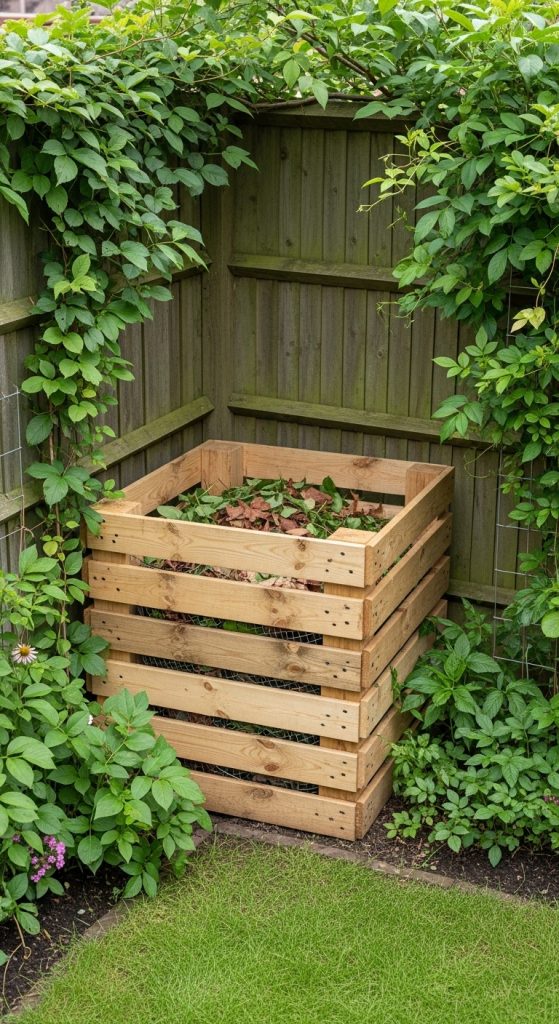
Tips & Tricks for Composting Success
- The Green & Brown Rule: For a pallet bin to work, aim for 1 part “Green” (kitchen scraps, fresh grass) to 3 parts “Brown” (dried leaves, shredded pallet cardboard).
- Keep it Damp: Your compost should feel like a wrung-out sponge. If it’s too dry, the wood in the pallets will suck the moisture out of the pile.
- Size Matters: A good pallet compost pile should be at least 3x3x3 feet. This is the “critical mass” needed to generate heat.
- Air is King: If your bin starts to smell bad, it usually means it needs more air. Poke a stick through the pallet gaps to create air chimneys.
Common Mistakes to Avoid
- Using Treated Wood: Never use pallets marked “MB” (Methyl Bromide). These chemicals will leach into your compost and eventually your food. Only use “HT” pallets.
- Composting Meat or Dairy: This will attract pests and create a terrible smell in your pallet bin. Stick to veggie scraps, coffee grounds, and yard waste.
- Forgetting to Turn: A pallet bin is great for airflow, but the center can still get compacted. Turn your pile once every two weeks for the fastest results.
Conclusion
Building a Pallet Compost Bin is the ultimate “full circle” project. You are using recycled wood to recycle your food waste to grow new food. It’s cheap, it’s easy, and it’s incredibly effective. Whether you build a single-bay bin or a professional three-bay system, your garden will thank you next spring!