6. Integrate Autumn-Blooming Perennials for Late Pollinators
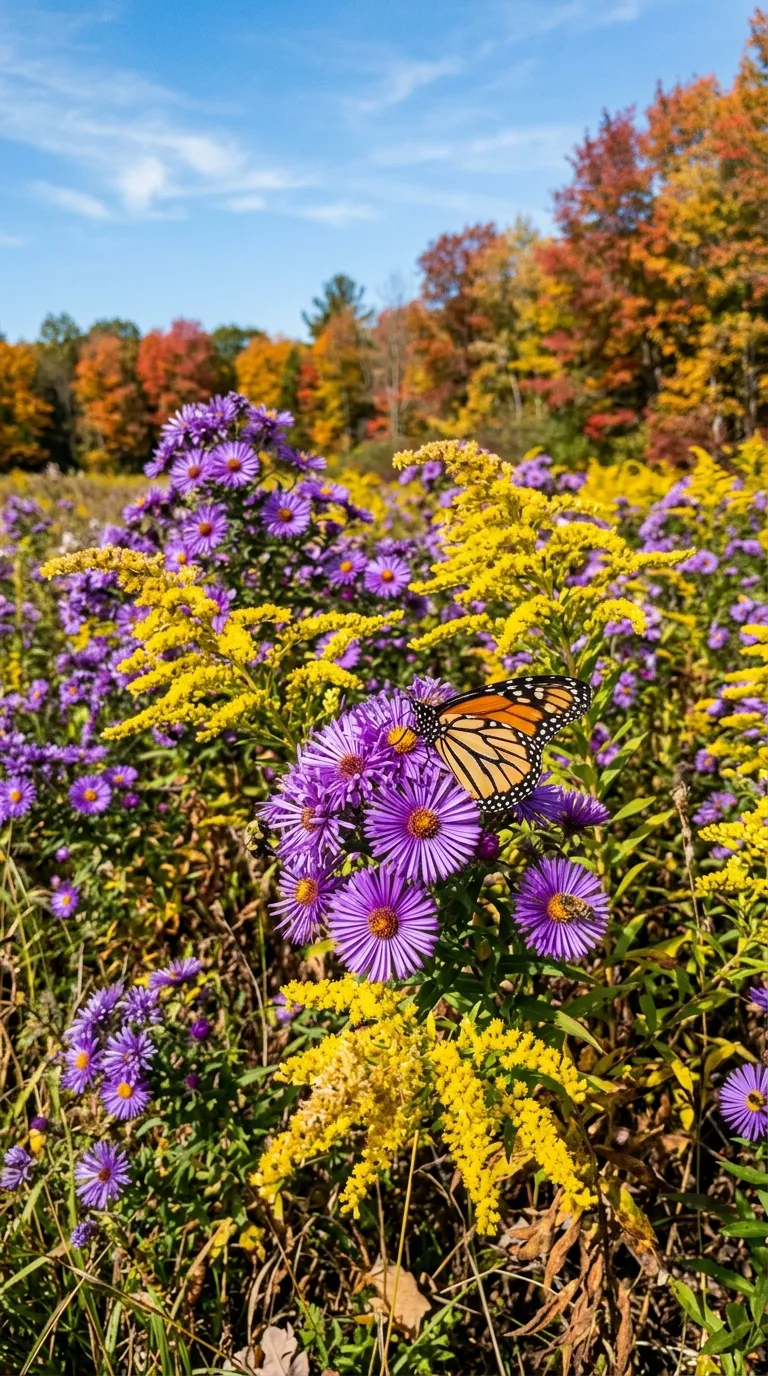
During the late summer and early autumn, many vital pollinating insects, including migrating monarch butterflies and native bees, are searching frantically for nectar sources to fuel their journeys or prepare for winter. By planting late-blooming perennials in your fall garden, you provide an essential ecological lifeline while ensuring your garden remains vibrant and colorful.
When incorporating these perennials into your garden beds, group them in large drifts rather than scattering them individually. This makes it much easier for foraging pollinators to locate the flowers from a distance. These plants thrive in full sun and appreciate a layer of organic mulch around their crowns to protect them from winter cold. Leave the faded flower heads standing at the end of the season, as their seeds will feed hungry birds throughout the winter.
- Asters: Covered in daisy-like blooms of blue, purple, and pink, these are a favorite of late-season butterflies.
- Stonecrop Sedum: Features thick, succulent leaves and flat flower clusters that transition from pale pink to deep copper-red.
- Goldenrod: Offers brilliant, feathery plumes of bright yellow that pair beautifully with purple asters.
- Coneflowers: While they bloom in summer, their sturdy seed heads remain highly decorative and feed local birds all winter.