10 Small Kitchen Space Ideas

10 Small Kitchen Space Ideas

Designing for a small kitchen is all about the “Three Cs”: Clarity, Consistency, and Cleverness. When space is limited, every square inch must justify its existence. The goal is to move beyond the feeling of being “cramped” and embrace the efficiency of a high-functioning, compact workspace.
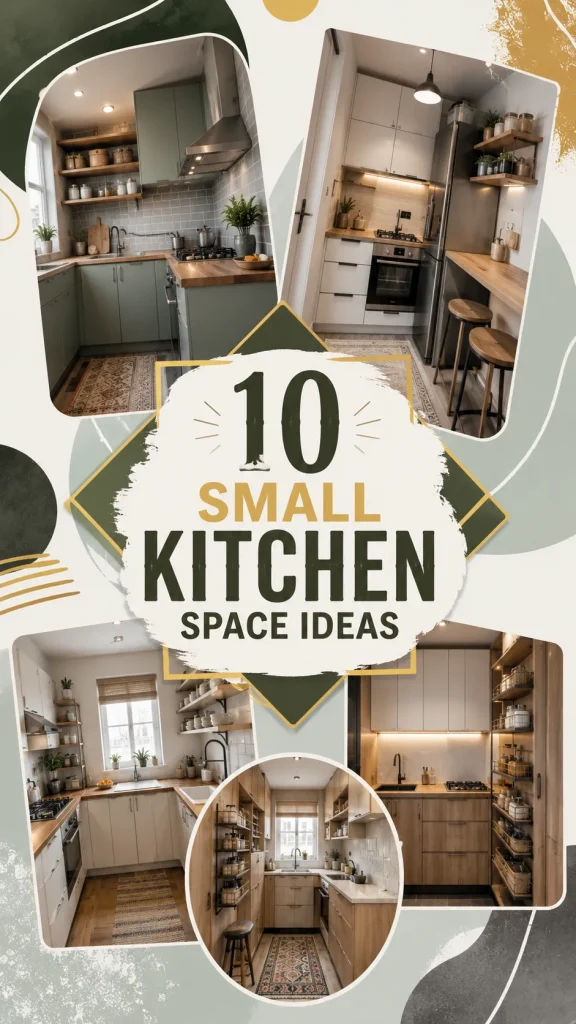
Here are 10 ideas to make your small kitchen feel larger, more professional, and highly organized.

1. The “Vertical Command” Wall

When floor space is non-existent, look up. Use a floor-to-ceiling grid of perforated pegboard or a sleek wall-mounted magnetic rack to store your most-used tools (pans, spatulas, knives).

  • Design Tip: Paint the pegboard the same color as the wall to make it disappear, turning your kitchen tools into a curated, functional art installation.

2. Monochromatic Palette

Dark or busy colors can make a small room feel boxed in. A crisp, monochromatic palette—using shades of white, cream, or light grey on both the walls and the cupboards—blurs the boundaries of the room, making it feel airy and infinite.

  • Design Tip: Use the same material for the countertop and the backsplash to create a seamless, uninterrupted line that tricks the eye into seeing more space.

3. Reflective Surfaces

Strategically use materials that bounce light. This doesn’t just mean high-gloss cabinets. Consider mirrored kickplates at the base of your cupboards or a mirrored backsplash.

  • Design Tip: Use a slightly smoked or antique mirror finish to add a touch of glamour without the harshness of a standard silver mirror.

4. Hidden “Pull-Out” Prep Stations

In a tiny kitchen, the biggest bottleneck is counter space. Install a butcher-block pull-out board that acts as a hidden drawer. When you need extra space for chopping, you pull it out; when you’re done, it tucks away perfectly.

  • Design Tip: Ensure the pull-out is installed at a comfortable “working height” rather than standard drawer height to prevent strain.

5. Open Shelving Over Cabinets

If you have a row of heavy upper cabinets, replacing them with two or three thick, floating shelves can instantly make the room feel 20% larger. The visual depth of the wall remains visible behind the items.

  • Design Tip: Keep these shelves sparse. Use them for your “pretty” items—matching glassware or a small plant—rather than everyday pantry clutter.

6. The “Appliance Garage”

Countertop clutter is the enemy of the small kitchen. Designate one cupboard as an “appliance garage” with built-in power outlets. This is where your toaster, coffee maker, and blender live.

  • Design Tip: Use a tambour (sliding) door or a lift-up cabinet door so the “garage” doesn’t take up extra aisle space when open.

7. Toe-Kick Drawers

The space beneath your bottom cabinets (the toe-kick) is typically dead air. Install shallow, pull-out drawers here to store flat items like baking sheets, cutting boards, or tablecloths.

  • Design Tip: These are perfect for items you use once or twice a week, keeping your primary cupboard space free for daily essentials.

8. Compact “Bistro” Seating

Instead of a bulky dining table, use a wall-mounted drop-leaf table that folds down when not in use. Pair it with two stools that can tuck entirely under the counter.

  • Design Tip: Use clear acrylic or ghost stools; because they are transparent, they don’t block the visual line of the floor, keeping the room feeling open.

9. Multi-Functional Sink Cover

A high-quality, heavy-duty wooden cutting board that is custom-fitted to sit flush over your sink basin can act as a secondary countertop when the sink isn’t in use.

  • Design Tip: Choose a durable wood like teak or walnut that can handle moisture and heavy chopping, essentially “creating” counter space where there was none.

10. Integrated “Deep” Storage

Replace standard lower cupboards with deep, full-extension drawers. Drawers are infinitely more efficient than cabinets in small spaces because you can see everything at a glance without having to crouch down and pull items out from the back.

  • Design Tip: Use adjustable dividers inside the drawers to keep items in place, ensuring you don’t waste a single millimeter of storage capacity.

Comments

No comments yet. Why don’t you start the discussion?

Leave a Reply

Your email address will not be published. Required fields are marked *