
In a world that demands constant connectivity and high-speed productivity, the act of retreating into a book is a radical and necessary form of self-care. A dedicated reading nook is more than just a chair in a corner; it is a physical boundary that separates the “doing” of your life from the “being.” By curating a space specifically designed for immersion and comfort, you elevate reading from a casual habit to a sacred daily ritual.

Whether you live in a sprawling home or a compact apartment, creating a cozy nook is achievable through simple, intentional DIY projects. Here are 10 ideas to help you craft your own sanctuary for everyday use.
1. The Under-Window “Window Seat” Transformation
The most classic reading nook location is under a window, utilizing the natural light for daytime reading.
- The Concept: If you don’t have a built-in window seat, build a low, box-style platform using plywood or MDF. Customize it with storage drawers underneath for your “To-Be-Read” pile.
- Why it works: It turns dead space into functional furniture. Adding a custom foam cushion and velvet throw pillows makes it a permanent, inviting destination.

2. The “Nook-in-a-Closet” Escape
If floor space is at a premium, look to your unused storage. Transforming a reach-in closet into a reading nook is the ultimate way to create a sense of private enclosure.
- The Concept: Remove the closet doors, paint the interior a deep, moody color (like forest green or navy), and install a soft bench seat or a floor-cushion setup. Add a warm, wall-mounted sconce to keep the area bright.
- Why it works: The enclosure provides a psychological “shield” from the distractions of the rest of the room.

3. The Floor-Based “Hygge” Den
Sometimes, the most comfortable reading posture is simply lounging on the floor.
- The Concept: Dedicate a corner to “floor living” by layering multiple thick rugs, a sheepskin throw, and a collection of oversized floor pillows or a “bean-bag” style lounger.
- Why it works: It removes the formality of furniture and encourages a more relaxed, unhurried physical state, which is perfect for long reading sessions.

4. The Floating Bookshelf Canopy
Reading nooks thrive on proximity to books.
- The Concept: Install floating shelves around your chosen reading chair or bench, creating a “cradle” of books that surrounds you.
- Why it works: Keeping your library within arm’s reach eliminates the need to get up, maintaining your state of flow.

5. The Corner “Sconce” Sanctuary
Lighting dictates the mood of your nook.
- The Concept: Instead of a bulky floor lamp, install a plug-in wall sconce above your seating area. Pair it with a warm-toned LED bulb (2700K).
- Why it works: It frees up floor space and creates a focused, intimate pool of light that directs your attention solely onto the page.

6. The “Curtain” Partition
If your nook is located in a living area or bedroom, you need a way to visually block out the rest of the room.
- The Concept: Install a simple ceiling-mounted curtain track or a tension rod with a sheer or heavy-weight curtain.
- Why it works: Pulling the curtain provides a tactile, sensory signal that you are “off duty” and transitioning into your private reading time.

7. The Tiered Plant Backdrop
Biophilic design—the integration of nature—is essential for a calming atmosphere.
- The Concept: Surround your chair with plants of varying heights. Use a wooden stand to elevate one large plant (like a Fiddle Leaf Fig) and hang trailing pothos from the ceiling or wall hooks.
- Why it works: Plants improve air quality and provide a visual “softness” that screens and walls lack, making the nook feel like an outdoor garden retreat.

8. The Side-Table “Tea Station”
A reading nook is incomplete without a place to rest a beverage.
- The Concept: If you don’t have space for a table, DIY a small, wall-mounted “floating shelf” just big enough for a mug of tea and a candle.
- Why it works: It prevents spills and keeps your hands free, allowing you to focus entirely on the physical experience of holding your book.

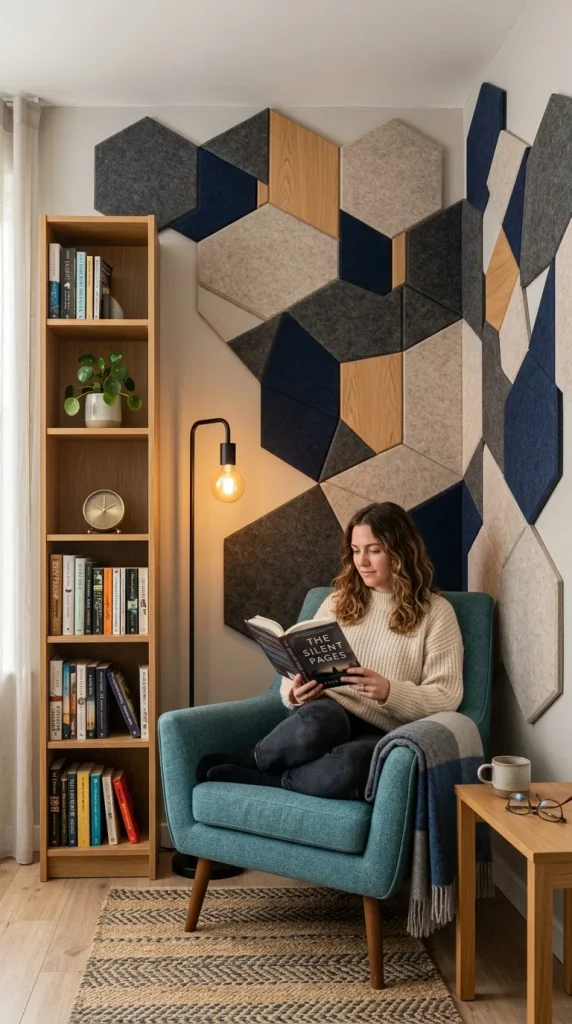
9. The Acoustic Corner
Silence is a rare luxury.
- The Concept: If you are building your nook in a high-traffic area, mount acoustic felt panels on the walls around your seat. You can even create an art piece by layering these panels in geometric patterns.
- Why it works: It physically dampens sound, creating a “quiet zone” that protects your concentration.
10. The Multi-Sensory Textural Layering
The final touch of a cozy nook is purely about touch.
- The Concept: Your nook should feel like a cocoon. Layer a lightweight cotton throw for warmer days and a weighted blanket or heavy knit wool throw for colder evenings.
- Why it works: The combination of textures—the scratch of a wool knit, the softness of velvet, the firmness of wood—creates a multi-sensory experience that makes it physically difficult to leave the nook.

Designing for Longevity: The Daily Ritual
The success of your reading nook depends on its maintenance as a “device-free” zone. Consider these final tips:
- The 3-Foot Rule: Keep your phone at least three feet away from your nook. If it’s within reach, the temptation to check it will always be stronger than the will to read.
- Personalization: Add one thing that has no functional purpose but makes you happy—a small piece of art, a favorite stone, or a specific scent (like a beeswax candle).
- Rotation: Don’t be afraid to change your nook with the seasons. Add a heavier blanket in the winter, or move it closer to a breeze-filled window in the spring.